Monday, December 19, 2022
The PGGRC, New Zealand Agricultural Greenhouse Gas Research Centre and Zoetis Animal Health are collaborating to research mechanisms that may inhibit methane emissions from cattle, deer and sheep and reduce greenhouse gas emissions.
Read more
Thursday, December 15, 2022
Since 2003, the PGGRC has invested more than $90 million in exploring technology-based solutions that New Zealand pastoral farmers can use to reduce GHG emissions from the sector, while increasing productivity. In 2021, direct funding concluded and the Consortium moved into a new phase, where its Intellectual Property and capabilities are now being developed to further advance possible solutions for New Zealand farmers.
Read more
Monday, November 22, 2021
This 60-minute webinar is on “Developing methane inhibitors for grazing livestock on New Zealand farms”.
Read more
Tuesday, April 6, 2021
PGGRC supports the creation of (a) a long-term plan for funding research and development towards reducing biological emissions and (b) a fit-for-purpose regulatory pathway. We look forward to working in partnership with all stakeholders to achieve these objectives.
Read more
Monday, July 6, 2020
In this 6-minute video, scientists involved in PGGRC’s four main streams of work - low-methane genetics, inhibitors, vaccine and low GHG feeds - outline where each project is at.
Read more
Wednesday, November 27, 2019
In a world first, New Zealand sheep farmers now have the ability to breed animals that emit less methane.
Read more
Wednesday, June 5, 2019
DairyNZ recently hosted six forums around New Zealand for dairy farmers to hear about where the world is heading and global future demands for dairy.
Read more
Friday, May 3, 2019
The 2019 Agricultural Climate Change Conference attracted more than 260 agricultural climate change focused scientists, policy makers, farmers and industry representatives to Palmerston North on 8-9 April.
Read more
Monday, April 29, 2019
Can changing what New Zealand livestock eat reduce the country’s emissions of methane and nitrous oxide?
Read more
Tuesday, May 29, 2018
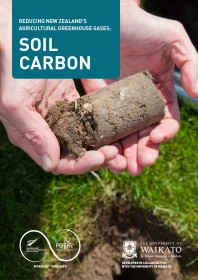
Soil holds more carbon than plants and the atmosphere combined and much of the soil carbon is held in a stable form. That’s good news from a climate change perspective.
Read more
Monday, August 28, 2017
One of the most promising tools in the strategy to reduce New Zealand’s greenhouse gas emissions from agriculture is making steady progress towards commercialisation.
Read more
Tuesday, July 18, 2017
The time is coming when greenhouse gases won’t be just “out there and something to worry about later”. New Zealand scientists are making steady progress on strategies to reduce the rural sector’s emissions.
Read more